

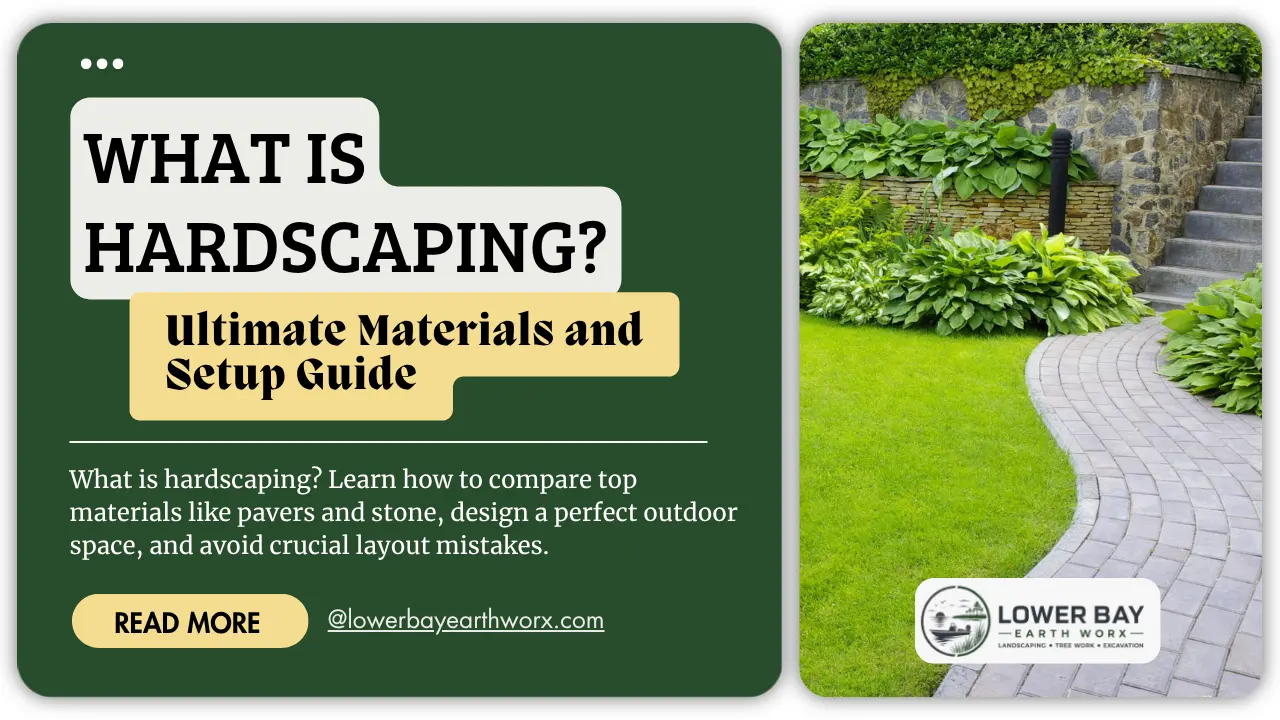
What is hardscaping? Hardscaping refers to the hard, built elements of your yard, like patios, walkways, walls, and driveways, that create structure, function, and usable outdoor living space. Unlike softscape elements (plants and grass), hardscapes are permanent features made from stone, concrete, wood, or metal.
Unlike softscape (living plants, grass, and trees), hardscapes are permanent features that define your property’s layout and provide year-round functionality. A well-designed hardscape transforms an empty yard into organized, accessible outdoor living areas. This also makes it easier to entertain, relax, and move around your property safely.
Understanding Hardscaping: Key Definitions
The terms hardscaping, hardscape, and hardscape in landscaping sound confusing. People often use these interchangeably. However, there are key differences.
What Is Hardscaping?
Hardscaping refers to the process, practice, or activity of installing hard, built elements in your outdoor space. When you’re doing hardscaping, you’re actively constructing or installing patios, walls, driveways, or other permanent features.
Example: “We’re investing in hardscaping this spring” or “Hardscaping costs vary by material.”
What Are Hardscapes?
Hardscapes are the individual hard, built structures themselves-the finished features in your yard. Hardscapes include patios, walkways, retaining walls, driveways, decks, and fire pits. They’re made from materials like stone, concrete, wood, brick, or metal.
Example: “The hardscapes in our yard include a stone patio and brick driveway” or “Quality hardscapes improve curb appeal.”
What Is Hardscape Landscaping?
Hardscape landscaping is the complete outdoor design approach that combines hard, built elements (hardscapes) with soft, living elements (plants, grass, trees). It’s the art of blending these two worlds to create a functional, beautiful, and balanced outdoor space.
Hardscape landscaping isn’t just about the patio or wall-it’s about how those features work together with plantings, grading, and drainage to form a cohesive yard design.
Example: “Good hardscape landscaping balances a large patio with surrounding plantings” or “Hardscape landscaping design requires planning for both structure and softscape.”
Why Does Hardscape Differ From Place to Place
Hardscaping installation varies significantly based on climate, soil, and drainage conditions. If you live in a coastal area, a humid region, or a property with heavy clay soil, your hardscape material choices and installation methods will differ. Understanding these factors helps prevent costly repairs like cracking, settling, or water damage
Tidewater Climate Challenges
In the winter, coastal properties experience high levels of humidity, salt air, and sometimes freezes and thaws. These conditions can lead to cracking, rusting, and deterioration of some materials in some areas versus others. The metal corrodes due to salt water. However, during a cold spell, some stones could flake. The first thing to consider before selecting a particular hardscape is the climate in your area.
Soil and Drainage Condition in the Area
Heavy clay soil or a high water table is common in coastal areas. Existing grades and soil information must be taken into account before installing. Without a plan, a new patio can cause water pressure to build up against your house.
Why Local Material Selection Matters
The durability will depend on the selection of the materials for the property at hand. Maintenance for a wooden deck is not the same as for a concrete paver patio. Using suitable materials for the local environment and changing soils will help prevent problems later on.
What Are Hardscapes in Landscaping?
Many people ask what hardscapes in landscaping are and how they differ from the rest of the yard. The simplest way to look at it is to divide your yard into two categories: hardscape and softscape.
Hardscape vs. Softscape
Hardscape consists of the “hard” elements such as patios and walkways, retaining walls, steps, and driveways. These are those areas of the garden that remain constant throughout the year. Softscape refers to the “soft” elements of living components such as grass, trees, shrubs, flowers, and groundcover. Hardscape gives structure and framework for the softscape to grow and flourish.
How Hardscape and Landscape Interrelate
Hardscape and landscape are not two distinct items. When comparing hardscaping vs landscaping, it’s important to understand that hardscaping focuses on built features, while landscaping can include both hardscape and living elements.
Common Types of Outdoor Hardscaping
There are many ways to use outdoor hardscaping to improve your home. Most projects fall into a few main categories based on how they help you use your yard.
Patios and Outdoor Living Areas
Patios are the most common hardscape feature. They create distinct outdoor areas for relaxation, meals, and entertaining. A patio is an outdoor living space, made of pavers or natural stone, or poured concrete. It provides a (new) flat surface for your furniture and grills.
Walkways, Steps, and Driveways
Walkways and steps provide a way to access various parts of the site. Driveways serve as convenient, safe access for cars. These elements play a key role in ensuring safety. For example, you don’t have to walk through mud or get tripped up on uneven terrain.
Retaining and Landscape Walls
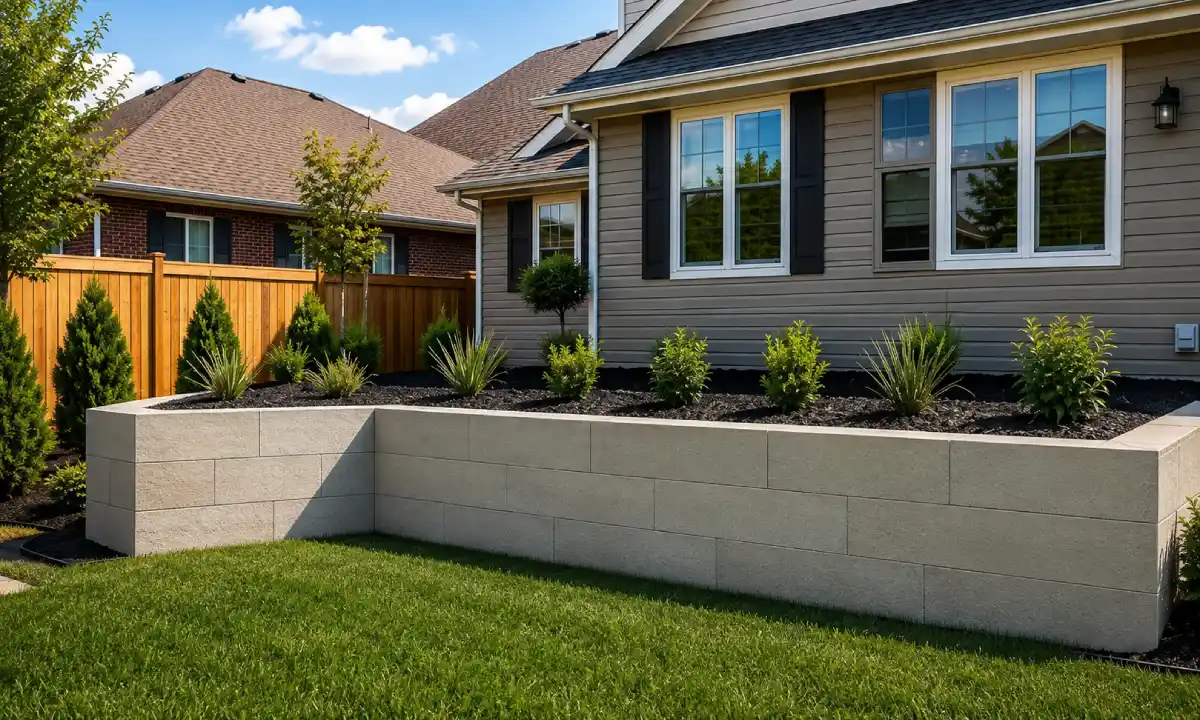
Retaining walls support soil and prevent erosion. They also smooth the slope of hilly terrain and are effective. Landscape walls are typically more decorative. They create additional seating space at the boundary of a patio. Both can add to the permanence and structure of a property.
Fire Pits/ Outdoor Kitchen
One of the most popular hardscape choices for modern-day homes is the fire pit or outdoor kitchen. These features will be the centerpiece of the yard. They allow people to gather outside, even when the weather is a bit cold, and provide warmth.
Benefits of Hardscaping
Hardscaping adds structure and function to outdoor spaces through features such as patios, walkways, retaining walls, driveways, and outdoor living areas.
- Improves functionality: Creates defined spaces for walking, parking, entertaining, and relaxing.
- Adds durability: Quality hardscape features can withstand regular foot traffic and changing weather conditions.
- Reduces lawn maintenance: Paved areas, patios, and other features can reduce the amount of grass that requires regular care.
- Improves drainage and grading: Properly designed hardscaping can help direct water away from structures and manage runoff.
- Enhances curb appeal: Well-designed pathways, patios, walls, and other features give a property a more finished appearance.
Popular Hardscape Materials & What Works Best
Choosing the right material is a big part of hardscape design. Each option has its own pros and cons depending on your budget and how you plan to use the space.
| Material | Best For | Durability | Maintenance |
| Concrete Pavers | Patios, walkways | Excellent (freeze-thaw resistant) | Low (weed control) |
| Natural Stone | High-end patios, accent walls | Excellent (timeless) | Medium (sealing, leveling) |
| Asphalt | Driveways | Good (seal every 2-3 years) | Medium (sealing required) |
| Permeable Pavers | Eco-friendly driveways, patios | Good | Medium (vegetation control) |
| Wood/Composite | Decks, raised beds | Good/Excellent | Medium/Low ( Staining, inspection) |
Concrete Pavers
Pavers are a popular surface for patios and for pedestrian walkways due to their resistance to freeze-thaw. They are separate units, so they don’t tend to crack as a solid slab might if they move a little. They are available in a variety of colors and styles and can be easily maintained to prevent weeds from sprouting between them.
Natural Stone
Natural stone has a timeless and high-end look. It’s very durable and suitable for nearly all outdoor uses. However, stones may be uneven and heavy and can require more labor to install properly.
Asphalt
Asphalt is a popular driveway material. It is flexible and is typically less expensive for large areas than pavers. If the asphalt is not sealed, water can leak in and cause soft spots in the asphalt in our humid climate.
Permeable Alternatives
Permeable pavers or gravel let water flow through the pavement and into the soil. They are suitable for sustainable landscaping and stormwater management. They can help to minimise runoff, a significant advantage on properties located close to the Chesapeake Bay or local rivers.
Wood and Composite
Wood or composite materials are typical materials used for decks and fences. Wood is certainly a sight to behold, but it needs to be stained frequently to withstand Virginia’s humidity. Composite materials are more expensive initially, but resist insects and rot much better in our humid climate.
How to install hardscaping
Once you have an understanding of the hardscaping installation process, you will realize what to expect when a crew arrives at your house. It is a multi-stage process that begins deep underground.
Prepare the Site
At this point, the old plants or debris are removed, and excavation is done to the proper depth. Appropriate grading of the base provides a slope away from the building.
Build the Hardscape
When the base has been completed, the team starts building. There are different cutting, placing, and securing requirements for each material. For instance, concrete hardscaping needs time to set properly under the local hot conditions and humidity.
Complete the Surrounding Landscape.
Once the hardscape construction is complete, then comes the surrounding landscape. This includes linking the new patio/ path to planting areas. The team will complete final grading to make sure the yard is smooth, level, and stable. This last cleanup makes the new feature look like it’s always been there.
Common Hardscaping Mistakes to Avoid
Poor planning can lead to drainage issues, cracking, uneven surfaces, and costly repairs. Avoid these common mistakes:
- Poor site preparation: Skipping proper excavation and base preparation can cause settling, shifting, or cracking.
- Ignoring drainage: Hard surfaces need proper slopes and drainage solutions to prevent water from pooling.
- Choosing the wrong material: Select materials based on climate, traffic, soil conditions, and intended use.
- Overlooking scale and layout: Hardscape features should fit the property’s size and connect naturally with existing spaces.
- Neglecting maintenance: Even durable materials need occasional cleaning, joint maintenance, sealing, or repairs.
Final Thoughts
Hardscaping is the hard, man-made portion of the landscape that provides structure, access, and usable space to every property. Built features, softscape, grading, and drainage all contribute to a beautiful and functional yard. Understanding what is landscaping can help homeowners see how these elements work together to create a complete outdoor space.
FAQ
What is hardscaping?
The non-living materials used to create structures in a yard, including patios, walls, and paths, are made of stone, wood, and concrete.
What are hardscapes in landscaping?
Who among you is familiar with landscaping hardscapes? They are the artificial elements that give the framework and form to a yard, in addition to the plants and grass.
What’s the difference between hardscape and softscape?
Hardscape: solid, permanent features such as stone or wood. Softscape means the living, growing portion of the yard, such as flowers, shrubs, and trees.
What are some examples of hardscapes for outdoors?
Outdoor hardscapes include patios, walkways, retaining walls, fire pits, driveways, and decks.
What exactly is “hardscape landscaping”?
A design philosophy emphasizing the significance of the use of built elements in an outdoor design context to provide an organized and functional design.