

Being a homeowner means you try to keep the yard as good as possible. Sometimes you look at the plain, boring space and think, what can improve it. Well, landscaping is the solution to a boring yard. It involves more than just planting a few flowers or keeping the grass green. Landscaping improves the curb appeal by creating a stunning yard.
What Is Landscaping?
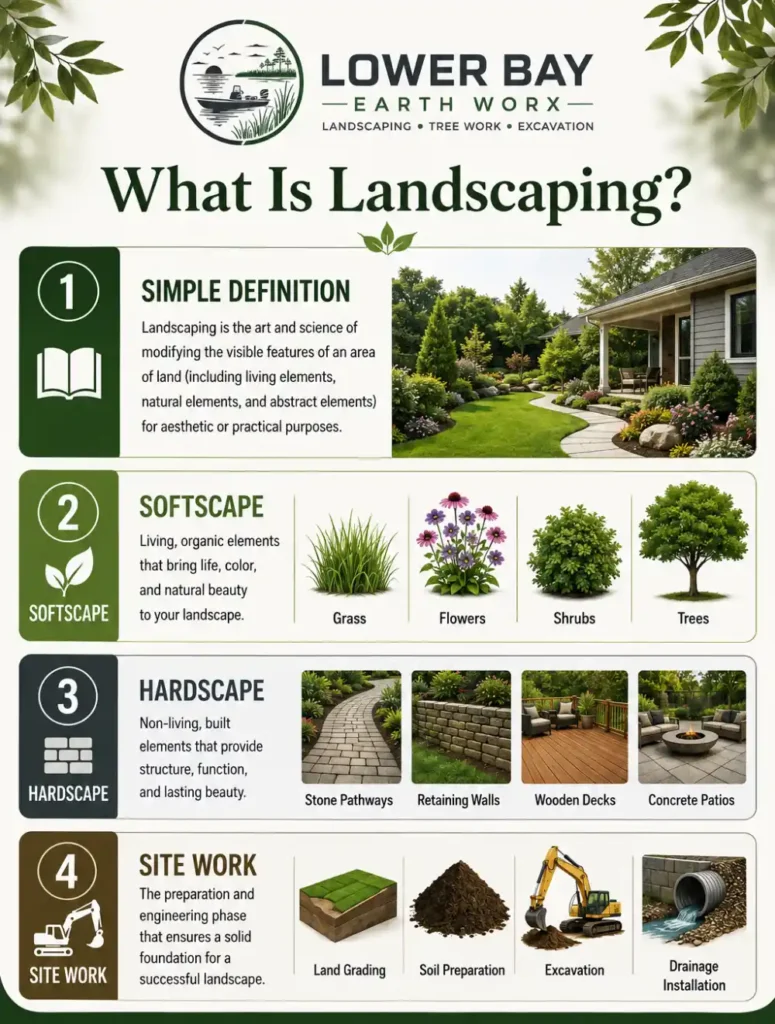
Many people often think of gardening when asked about landscaping. However, landscaping is a broader term. It covers both the design and the physical work that changes a property’s environment. Landscaping means modifying the visible features of an area of land. So, living elements like plants and grass. As well as non-living features like stone paths or retaining walls.
What is considered landscaping depends on how you would change your yard’s appearance. For example, you may reshape a slope so that water flows away from your house. This is also a landscaping part. It is about making the outdoor space a place where you want to spend time.
What Does Landscaping Include?
When homeowners take a step to embark on a landscaping project, many of them question what it entails. It’s not a single service, but a series of services that collaborate.
Plants, Trees, and Softscape
Softscape is the “soft” parts of your yard; the living parts. This includes the plant beds that lend color to your front porch and the shrubs that serve as a natural fence. Trees, a significant component of this, provide shade and value to your property. Mulch is also part of this list, as it helps to keep soil separate and provides a completed appearance to the garden.
Hardscaping and Outdoor Features
The “hard” or built features of the yard are categorized as hardscaping. This includes stone, brick, or concrete patios, walkways, and retaining walls. Hardscapes give your property structure.
Grading, Drainage, and Site Preparation
The ground has to be ready before planting or constructing anything. This involves the clearing of silt and dirt from the land. And shaping it to provide a path for water to flow in the appropriate direction. Otherwise, your new plants could become waterlogged in puddles, and your new patio could crack due to ground movement.
What Are the Types of Landscaping?
For the property owner, there are different types of landscaping. It depends on what the owner wants.
Residential Landscaping
Residential work is a focus on private homes. This includes front yards with curb appeal and backyards for family fun. Frequently includes creating planting spaces. Adding outdoor entertainment areas such as fire pits and improving the property. The objective is to improve the quality of the home and make it more meaningful for the family residing in it.
Commercial and HOA Landscaping
Commercial landscaping is for business properties, shopping centres, and Homeowners Associations (HOAs). These projects are related to public spaces and common areas. The aim is a uniform look and safety for the public.
Landscape Renovation
A yard requires a fresh beginning at times. Landscape renovation is the process of renovating an existing landscape that is overgrown or outdated. This could include trimming old and lifeless bushes and planting new varieties. Moreover, you can redesign a backyard that is no longer relevant to the family.
Site and Landscape Improvements
A lot of properties in Coastal Virginia have special site improvements required. This encompasses grading, drainage, excavation, and lot clearing. It may be a swampy backyard or a lot of old stumps. These landscape upgrades will make the land useful and create a yard.
How Landscaping Improves Your Property?
Landscaping does more than improve curb appeal. A well-planned landscape can make outdoor spaces more functional, comfortable, and easier to maintain.
- Improves curb appeal: Well-maintained plants, lawns, and garden features make your property very attractive.
- Adds outdoor functionality: When you plan carefully, landscaping can create functional spaces. You can use them for relaxing, walking, or recreation.
- Supports drainage and erosion control: Proper grading, plants, and ground cover can help manage rainwater and reduce soil erosion.
- Provides shade and privacy: Trees, shrubs, and strategic planting give privacy to your yard.
- Can increase property value: An attractive, functional landscape can make a property more appealing to potential buyers.
Landscaping vs. Lawn Care, Gardening, and Hardscaping
It is easy to get confused by the different terms used in the industry. While they all happen outside, they are not the same thing. Understanding what is considered landscaping requires knowing how it differs from other services.
| Landscaping | Lawn Care | Gardening | Hardscaping | |
| Primary focus | Overall outdoor property improvement | Turf health and appearance | Plants and garden areas | Built outdoor features |
| Main elements | Plants, trees, grading, drainage, hardscape | Grass and turf | Flowers, shrubs, vegetables, and other plants | Patios, walkways, walls, steps |
| Typical work | Design, installation, site preparation, and landscape improvements | Mowing, fertilizing, aeration, and weed control | Planting, pruning, watering, and bed care | Building and installing structural features |
| Main goal | Create a functional, attractive outdoor space | Keep the lawn healthy and maintained | Grow and maintain plants | Add structure, usability, and visual appeal |
| Can be part of landscaping? | — | Yes | Yes | Yes |
There is considerable overlap in these services. A landscaper may install a new lawn (landscaping), but a lawn care company will mow the lawn weekly. Gardening is a pastime or a particular activity in a garden. Hardscaping is a specific aspect of landscaping that involves the use of hard materials. That isn’t to say they are interchangeable, but they all help to make a gorgeous yard.
How Does a Landscaping Project Work?
There is an easy sequence that’s followed in a successful landscaping project. These steps will help the end product be great and usable.
Assess the Property
The first step is to consider what you have already. It is important to have an understanding of the available space. We review your plans for using the area and what may be in the way.
Plan the Landscape
Once you know what you are working with, you can make a plan. This is when you decide where the plants will go and where the patio should be built. And plan other improvements. A good plan prevents wasted money and ensures all the elements of the yard fit together.
Prepare and Build
This is the “heavy lifting” phase. It starts with clearing the lot and excavating the soil. Then, the team handles grading and drainage to make sure the ground is stable. After the ground is ready, the hardscape features like walls or paths are installed. Followed by the larger plants and trees.
Finish and Maintain
The final step is to add the finishing touches. This includes spreading mulch, planting smaller flowers, and cleaning up the site. After installation comes the maintenance part. Watering and pruning help keep the landscape looking its best for years to come.
Common Landscaping Mistakes to Avoid
Even simple landscaping projects can create problems when they are not properly planned. Avoid these common mistakes:
- Choosing plants without considering the site: Match plants to sunlight, soil, moisture, and local climate conditions.
- Ignoring drainage: Poor drainage can leave standing water, damage plants, and contribute to erosion.
- Overcrowding plants: Allow enough room for plants to grow without competing for space, water, and nutrients.
- Skipping maintenance planning: Choose plants and features that match the amount of time and upkeep you can realistically provide.
- Focusing only on appearance: A landscape should also support drainage, accessibility, privacy, and how you use the property.
When Should You Hire a Professional Landscaper?
- Too large tasks involving heavy equipment need professional help.
- Constructing a retaining wall or stone patio
- Grading, drainage work
- When you don’t have the tools and expertise to do landscaping tasks
Final Thoughts
Landscaping is more than just flowers and mowing the lawn! It provides an effective and beautiful outdoor area. A well-planned landscape is a reflection of the property location.
FAQ
What are some examples of landscaping?
Examples include planting trees, installing a brick patio, regrading a backyard to drain the puddles, and laying mulch or decorative stone in garden beds.
In simple terms, what is landscape?
Put simply, a Landscape is the sum of all the things you see when you gaze outside at an outdoor space, such as the ground, plants, buildings, water, etc.
What is a landscaper’s job?
A landscaper designs, builds, and maintains outdoor areas. They dig, plant,t and construct structures, and level the ground appropriately for drainage.
Is landscaping the same as gardening?
No, gardening is only about taking care of plants. But landscaping covers all aspects of design, including earthmoving and permanent structure construction.
How many different kinds of landscapes are there?
There are many types, but the most common are residential site improvements, commercial site improvements, and specialty site improvements such as grading, drainage, and extensive improvements.
What are the services provided in landscaping?
Services offered include site preparation, lot clearing, grading, drainage, planting, hardscaping, and maintenance such as pruning and mulching to ensure a healthy yard.
What is the difference between lawn care and landscaping?
Lawn care is the upkeep of an already established lawn (mowing, fertilizing, etc.). The larger of the two is landscaping, which involves designing and altering the entire yard.
What are the most common landscape services?
The general categories include residential property work, commercial property maintenance, and site work, which involves grading, excavation, lot clearing, and drainage repairs, etc.